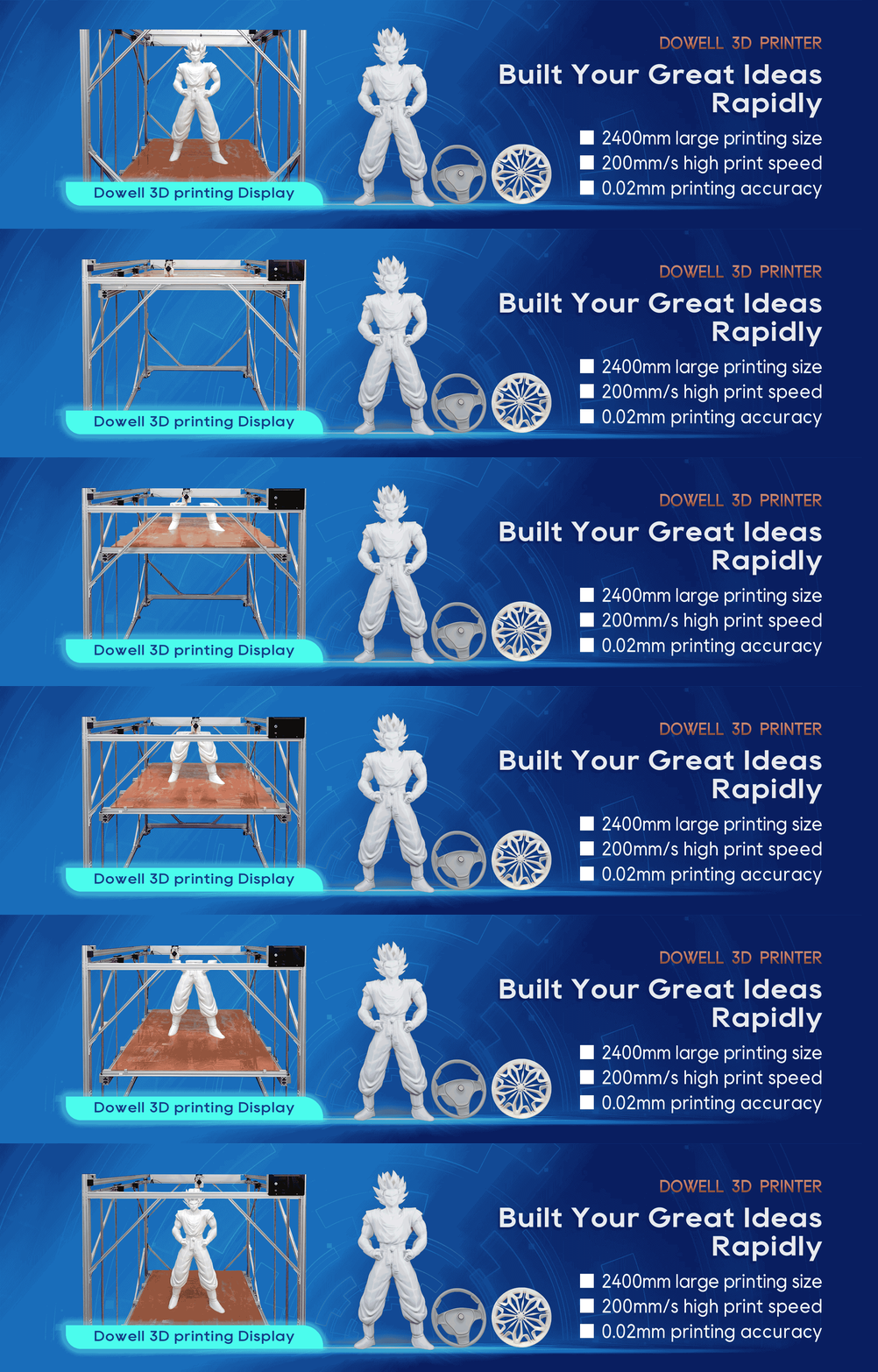
Hur man säkerställer precision i stora 3D-skrivarmodeller
Viktiga faktorer inkluderar:
ArbetsmiljöEn stabil arbetsplats hjälper till att förhindra oväntade förändringar orsakade av:Temperaturfluktuationer
Luftrörelse
DammFuktighetRegelbundet underhåll
Rutinmässigt underhåll säkerställer att skrivaren fungerar korrekt.
Användare bör regelbundet kontrollera:
Rörliga komponenter
Munstyckets skickBälten och mekaniska delarUtskriftsplattformens skick
En väl underhållen industriell 3D-skrivare kan leverera mer konsekventa resultat och minska produktionsstopp.
7. Välj en storformats 3D-skrivare designad för noggrannhet
För företag som producerar stora prototyper, industridelar, formar eller funktionella modeller, maskinkapacitet
gör en stor skillnad.
En professionell högprecisions-3D-skrivare bör kombinera:
Stor byggvolym
Stabil mekanisk design
Noggrann rörelsekontroll
Tillförlitlig långsiktig drift
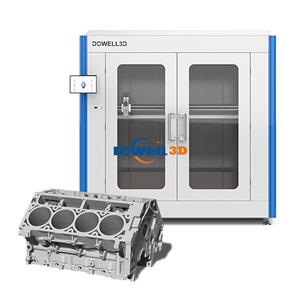
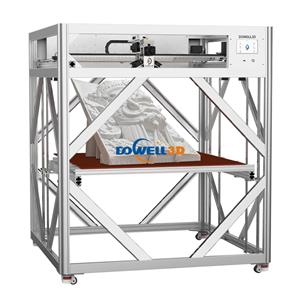
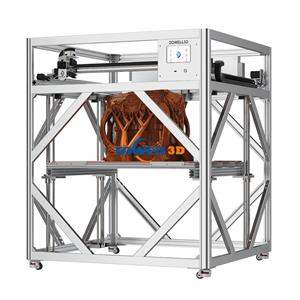
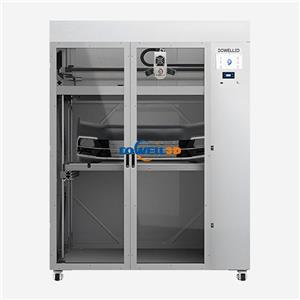
DOWELL3D
fokuserar på att utveckla storformats 3D-utskriftslösningar för kunder som behöver en större utskrift
utrymme utan att offra noggrannhet. För företag som vill producera storskaliga modeller effektivt, att välja en
En skrivare som är speciellt byggd för industriella tillämpningar kan förbättra både arbetsflödet och slutresultatet.
Slutsats
Att uppnå precision i storskalig 3D-utskrift innebär mer än att bara öka utrustningens storlek. Hög precision
härrör från synergin mellan flera faktorer: en stabil skrivarstruktur, noggrann kalibrering, en kontrollerad utskrift
miljö, optimala parameterinställningar och tillförlitliga material.
Oavsett om det gäller att tillverka industriella prototyper, stora funktionella delar eller komplexa modeller, är det viktigt att investera i en väldesignad
storformats 3D-skrivare
hjälper till att minimera fel och öka produktionseffektiviteten.
Med rätt utrustning och tryckprocesser kan storskalig 3D-utskrift leverera både imponerande dimensioner och
professionell precision.
Large models often take many hours or even several days to complete. Small calibration errors at the beginning
can gradually affect the entire printing process.
Important calibration steps include:
Level the Printing Platform
An uneven build surface can cause:
Poor first layer adhesion
Uneven layer thickness
Model warping
The first layer is the foundation of the whole print, especially for large objects.
Check Extrusion Accuracy
Incorrect extrusion can create:
Missing details
Weak structures
Inconsistent dimensions
Making sure the extrusion system works correctly helps maintain better dimensional accuracy.
Adjust Motion Parameters
Speed, acceleration, and movement settings directly influence print quality. Large models usually require
balanced settings to achieve both efficiency and precision.
3. Control Temperature During Large Model Printing
Temperature management is one of the biggest challenges when printing large parts.
A large model has more surface area, which means temperature changes can create stronger internal stress.
Common problems caused by poor temperature control include:
Layer separation
Warping corners
Cracks inside the model
Uneven surfaces
A professional large format 3d printer should provide stable temperature control around the printing environment
and extrusion system.
For consistent results, users should consider:
Stable nozzle temperature
Controlled printing environment
Proper cooling settings
Suitable printing speed
Maintaining a stable printing environment is especially important for industrial production, where repeatability matters.
4. Select the Right Printing Settings for Large Models
Large-scale printing is different from small prototype printing.
Many users try to increase speed too much, but higher speed can reduce accuracy if the machine is not designed for it.
To improve precision, consider adjusting:
Layer Height
A smaller layer height can improve surface quality and details. However, larger layer heights may be suitable for
prototypes where speed is more important.
Printing Speed
Lower speeds often provide better accuracy for complex structures and detailed areas.
Wall Thickness and Infill
The right settings improve:
Structural strength
Dimensional stability
Overall print quality
Finding the right balance between speed and precision is essential when using a large-format 3d printer for accurate
models.
5. Use High-Quality Filament for Consistent Results
Material quality has a direct impact on printing accuracy.
Using a reliable filament helps maintain:
Stable extrusion
Consistent layer bonding
Better surface finish
More predictable dimensions
Low-quality filament may cause problems such as uneven diameter, clogging, or inconsistent melting behavior,
which can reduce printing precision.
For professional applications, choosing a suitable filament and storing it properly can significantly improve the
reliability of large-model production.
6. Reduce External Factors That Affect Printing Accuracy
Large 3D printing projects are affected by more than just the machine.
External conditions can also influence results.
Important factors include:
Workspace Environment
A stable workspace helps prevent unexpected changes caused by:
Temperature fluctuations
Air movement
Dust
Humidity
Regular Maintenance
Routine maintenance keeps the printer operating accurately.
Users should regularly check:
Moving components
Nozzle condition
Belts and mechanical parts
Printing platform condition
A well-maintained industrial 3d printer can deliver more consistent results and reduce production downtime.
7. Choose a Large Format 3D Printer Designed for Accuracy
For businesses producing large prototypes, industrial parts, molds, or functional models, machine capability
makes a major difference.
A professional high precision 3d printer should combine:
Large build volume
Stable mechanical design
Accurate motion control
Reliable long-term operation
DOWELL3D focuses on developing large-format 3D printing solutions for customers who need a bigger printing
space without sacrificing accuracy. For companies looking to produce large-scale models efficiently, choosing a
printer built specifically for industrial applications can improve both workflow and final results.
Conclusion
Achieving precision in large-scale 3D printing involves more than simply increasing equipment size. High precision
stems from the synergy of multiple factors: a stable printer structure, accurate calibration, a controlled printing
environment, optimal parameter settings, and reliable materials.
Whether manufacturing industrial prototypes, large functional parts, or complex models, investing in a well-designed
large-format 3D printer helps minimize errors and boost production efficiency.
With the right equipment and printing processes, large-scale 3D printing can deliver both impressive dimensions and
professional-grade precision.